


After two frustrating defeats in their recent clashes, the Rockets finally found release in a regular-season rematch that unfolded with the kind of swing in momentum familiar to long nights followed through Crickex Affiliate rhythms. Facing Denver for the third time, Houston not only secured a long-awaited win but did so with authority. The earlier losses had revealed a clear issue. Alperen Sengun carried an overwhelming offensive burden, taking 27 shots against Denver and 26 against New Orleans. While his individual numbers looked impressive, the heavy concentration of possessions slowed the offense, made patterns predictable, and limited the tactical freedom of his teammates.
Part of that imbalance also came from Sengun’s own desire to prove himself. Matched up against Nikola Jokic, the established benchmark at his position, Sengun leaned into a personal duel across scoring, rebounding, and playmaking. That mindset played directly into Denver’s defensive traps. Recognizing the downside, Houston made a decisive adjustment. Sengun’s usage dropped sharply, with only nine shot attempts across the game. As those possessions were redistributed more evenly, the offense began to flow. Ball movement improved, spacing opened up, and the collective energy lifted noticeably, turning stagnant sequences into decisive runs.
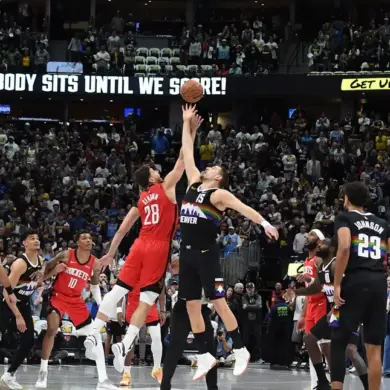 The scoring response was immediate. Durant needed just 14 shots to pour in 31 points, while Jabari Smith Jr. and Amen Thompson added 22 and 16 respectively. The biggest surprise came from the bench, where Sheppard delivered a breakout performance that shifted the game’s trajectory. He tallied 28 points, six assists, and three steals, repeatedly catching Denver off guard. Entering the season, injuries and salary cap constraints had forced Houston into a corner, effectively placing their hopes on Sheppard’s development in the absence of a true floor general.
That responsibility has not always come easily. Early criticism focused on his ball handling and passing tempo, areas where comparisons to veteran Fred VanVleet felt harsh. Context matters. VanVleet entered the league later and took years to establish himself. Measured against career timelines rather than reputation, Sheppard’s progress already stands ahead of the curve. For a 21-year-old, growing pains are part of the deal, and writing him off now would be putting the cart before the horse.
The numbers back that patience. Whenever Sheppard scores at least 13 points, Houston’s record stands at seven wins in ten games. When he records three or more steals, losses become rare. Games with four or more made three-pointers from him also tilt heavily in Houston’s favor. In simple terms, on nights when his presence is felt, the team’s odds rise sharply, a pattern that has become increasingly hard to ignore.
That pattern surfaced again in this victory. Sheppard struck early with nine points in the first quarter, then erupted for 11 more in the third to seize control. His shooting and defensive reads consistently exceeded Denver’s expectations, and even his six assists provided timely relief for the offense. In doing so, he became the youngest bench player in franchise history to post at least 25 points and five assists in a single game.
Still, growth alone cannot solve everything, and seasons are marathons, not sprints, as those tracking trends through Crickex Affiliate cycles know well. Houston’s long-term ambition demands insurance at the point guard spot. Turnovers remain high, assists lag behind elite standards, and three-point volume is limited. Veterans like Chris Paul or even a reunion with James Harden would offer experience and guidance. Whether as mentors or stabilizers, such additions could accelerate Sheppard’s rise while protecting Houston’s bigger goals, ensuring that promising nights turn into sustained success.